
Why Safety Standards Matter in Network Infrastructure Projects

Safety is one of the most important foundations of successful network infrastructure projects.
In industries like structured cabling, wireless networks, multimedia systems, physical security, and data center infrastructure, the environments teams work in are often active, fast-moving, and technically demanding. Projects may involve elevated work areas, energized environments, live facilities, congested construction sites, heavy coordination with multiple trades, and schedules that continue evolving throughout the build process.
In those conditions, safety is not separate from the work. It is part of the work.
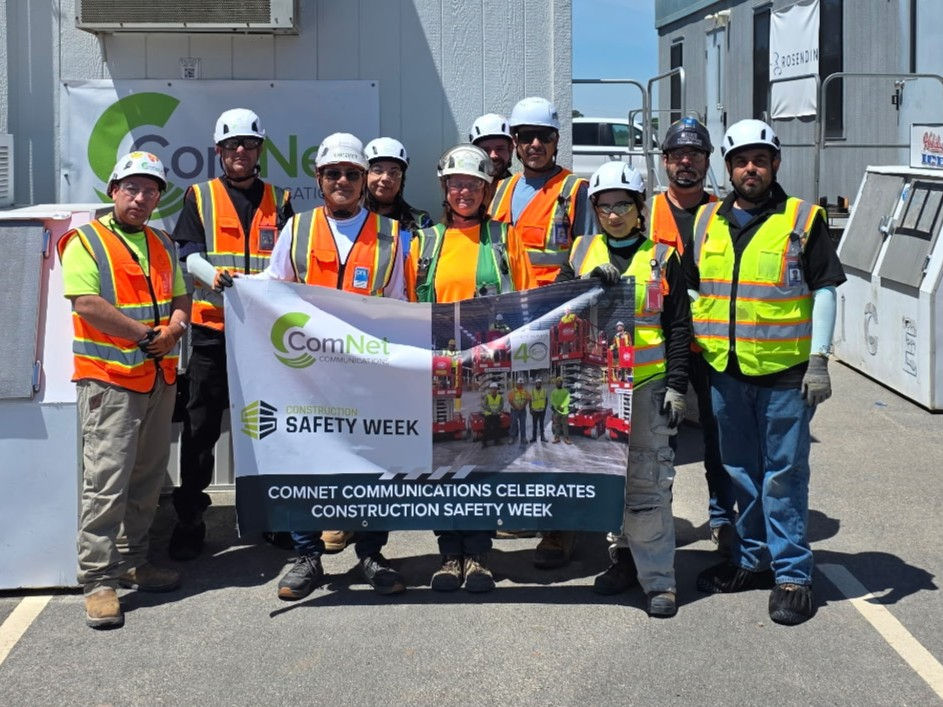
Construction Safety Week recently brought additional attention to the importance of recognizing hazards, planning effectively, communicating clearly, and supporting strong jobsite awareness across the construction industry. Those conversations matter, but the responsibility extends far beyond a single week. In network infrastructure, safety protocols and industry standards influence how projects are planned, executed, documented, and maintained every day.
For companies like ComNet Communications, safety is closely tied to operational discipline, project coordination, and long-term infrastructure performance.
Safety Begins Before Work Starts
Strong safety performance starts long before installation begins onsite.
Project planning, site assessments, coordination meetings, risk evaluations, scheduling discussions, and defined work procedures all contribute to safer execution in the field. The earlier risks are identified, the better teams can prepare for changing conditions, coordinate around other trades, and establish controls that support both safety and productivity throughout the project lifecycle.
This becomes especially important in environments such as:
Hyperscale and enterprise data centers
Healthcare and hospital facilities
Manufacturing and industrial environments
Distribution and logistics facilities
Active commercial campuses and occupied buildings
These projects often involve multiple contractors working simultaneously across different phases of construction. Conditions can change quickly, and communication between teams becomes critical.
The most effective safety cultures are proactive. They focus on awareness, preparation, coordination, and accountability before work begins, not after problems occur.
Industry Standards Create Safer, More Consistent Outcomes
Industry standards help establish consistency across infrastructure deployments.
Organizations such as BICSI, OSHA, TIA, and the National Safety Council provide frameworks that support safer work practices, installation quality, training expectations, and operational alignment across the industry.
These standards influence areas including:
Pathway and cable routing practices
Grounding and bonding requirements
Fiber handling and testing procedures
Labeling and documentation standards
PPE expectations and jobsite protocols
Ladder safety and fall protection awareness
Coordination practices across active construction environments
Standards are important because infrastructure systems are expected to support long-term performance, scalability, maintainability, and reliability after installation is complete.
Consistency in installation practices also helps customers maintain organized systems that are easier to support, troubleshoot, expand, and document over time.
Communication Is One of the Most Important Safety Tools
Technology infrastructure projects depend heavily on communication.
Project managers, field supervisors, technicians, general contractors, safety leaders, and customers all play a role in maintaining awareness across a project site. Daily coordination meetings, toolbox talks, pre-task planning discussions, and ongoing communication help teams stay aligned as conditions evolve.
Strong communication also helps reinforce accountability.
When teams feel comfortable raising concerns, clarifying conditions, or identifying changing risks, projects operate more effectively and safely. That level of engagement helps create jobsites where awareness remains active throughout the workday instead of becoming routine or overlooked.
The strongest project environments are often the ones where communication stays consistent, direct, and respected across every level of the team.
Safety and Project Performance Are Closely Connected
In network infrastructure, safety and project execution are closely linked.
Well-organized projects typically reflect strong planning, clear communication, defined procedures, and disciplined coordination in the field. Those same qualities also contribute to better safety outcomes.
ComNet Communications supports projects across complex commercial, industrial, and data center environments where attention to detail, organization, and coordination are essential throughout every phase of deployment. Whether supporting structured cabling systems, wireless infrastructure, multimedia technologies, or physical security systems, the focus remains the same: delivering infrastructure responsibly, professionally, and with consistent execution standards.
Because successful infrastructure projects are not measured only by timelines or installation volume. They are also measured by how the work was planned, coordinated, documented, and completed throughout the process.
Building a Long-Term Safety Culture
Strong safety cultures are built over time.
Training, preparation, leadership involvement, communication, and shared accountability all contribute to environments where teams stay aware, engaged, and focused on doing the work the right way.
Construction Safety Week helps reinforce those conversations across the industry, but long-term safety cultures are shaped by what happens after the campaign ends. The habits teams build every day, how projects are planned, how risks are discussed, and how people communicate onsite are what create lasting impact over time.
In the network infrastructure industry, safety supports more than compliance. It supports people, project execution, operational consistency, and long-term infrastructure performance.
And in complex environments where reliability matters, that responsibility never stops.
Comments